
October 2, 2026
Generator or Solar for Off-Grid RV Camping: Which One Makes Sense for You?
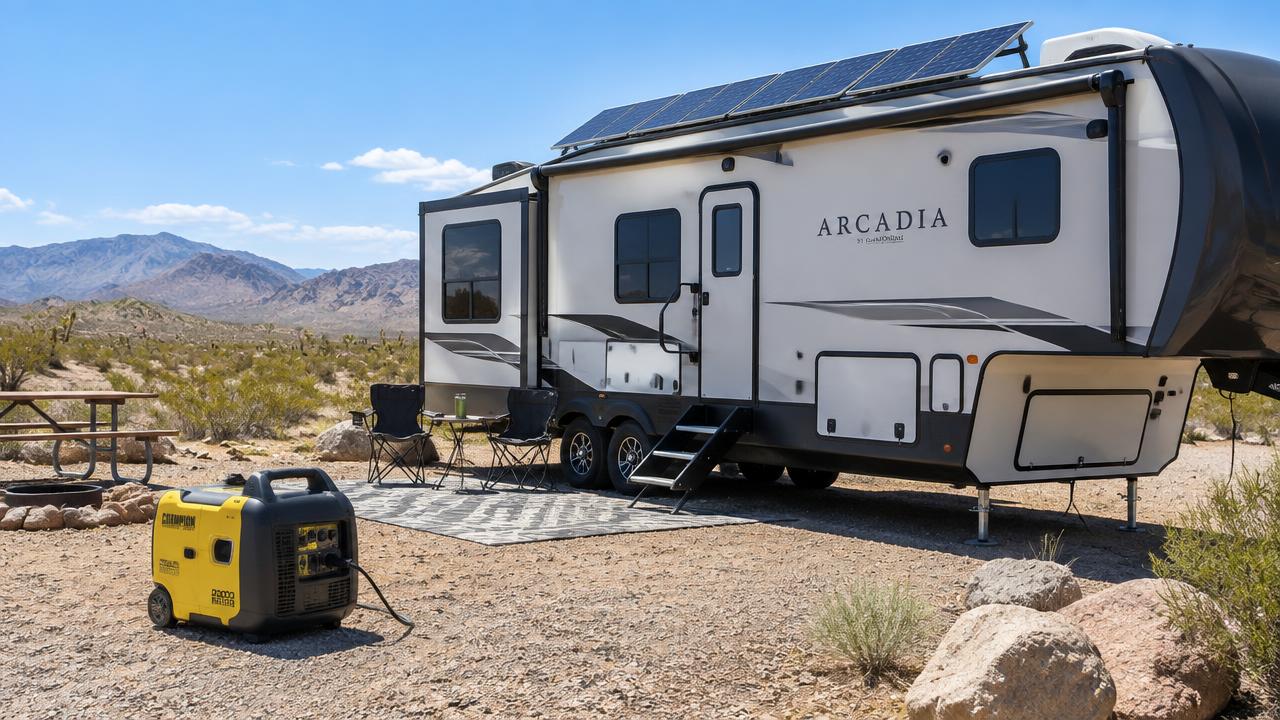
Off-grid camping is one of the best parts of RV life in Southern California. Desert open spaces, mountain forest roads, and quiet spots far from the crowds. To enjoy them, you need a way to keep your batteries charged. The two main options are a generator and solar, and the right choice depends on how you camp.
How a generator works for you
A generator burns fuel to make electricity on demand. It can power big loads like air conditioning or a microwave directly, and it can charge your batteries through your RV's charger.
- Strengths: power any time, day or night, in any weather; handles heavy loads.
- Tradeoffs: noise, fuel to carry and store, maintenance, and exhaust.
How solar works for you
Solar panels turn sunlight into electricity that charges your batteries through a charge controller. Your batteries and inverter then run your devices.
- Strengths: silent, no fuel, very little maintenance, and well suited to sunny Southern California.
- Tradeoffs: output depends on sun, season, and shade; heavy loads drain batteries fast; limited by roof space.
Noise and campground rules
Many campgrounds limit generator hours, and some areas restrict them entirely. Even where they are allowed, neighbors appreciate quiet. If you like peaceful camps, solar has a clear edge. If you need air conditioning on a hot afternoon, a generator may be the only practical option.
Fuel vs. sun
A generator is only as good as your fuel supply. On longer trips that means carrying and storing fuel safely. Solar needs sun, and Southern California has plenty of it, but winter days are shorter and lower, and a run of cloudy days can leave you short. Shade from trees or canyon walls also cuts output.
Combining both in one system
For a lot of owners, the best answer is both. Solar handles everyday charging quietly, and the generator steps in for cloudy stretches or heavy loads. Built around Victron components, solar, generator, batteries, and inverter can work together as one system, with a battery monitor showing exactly where you stand.
In a well set up system, you might start the generator only occasionally. That saves fuel, reduces noise, and still gives you a safety net.
Which setup fits which camper
- Weekend campers at sites with generator hours: a generator alone can work well.
- Quiet boondockers in sunny areas who use modest power: solar with a good battery bank fits.
- Remote workers running laptops and Starlink: solar plus a generator backup is a common choice.
- Owners who need air conditioning off-grid: plan on a generator, ideally paired with solar and batteries.
What you can check yourself
- List what you run each day and for how long.
- Note whether your favorite spots allow generators.
- Check your roof space and how often you camp in shade.
- Think about whether you need air conditioning off-grid.
When to call a pro
Setting up a generator so it works cleanly with your RV, sizing solar, and making both work with your batteries takes some planning. We handle off-the-grid generator setups, new solar installs, and Victron off-grid systems. Every job starts with a clear, detailed written estimate.
Not sure which is right for you?
Call (855) 589-7533 and we will help you decide based on how you camp.