
October 2, 2026
Coastal Salt Air and Your RV: Protecting Aluminum, Rivets, and Seals Near the Beach
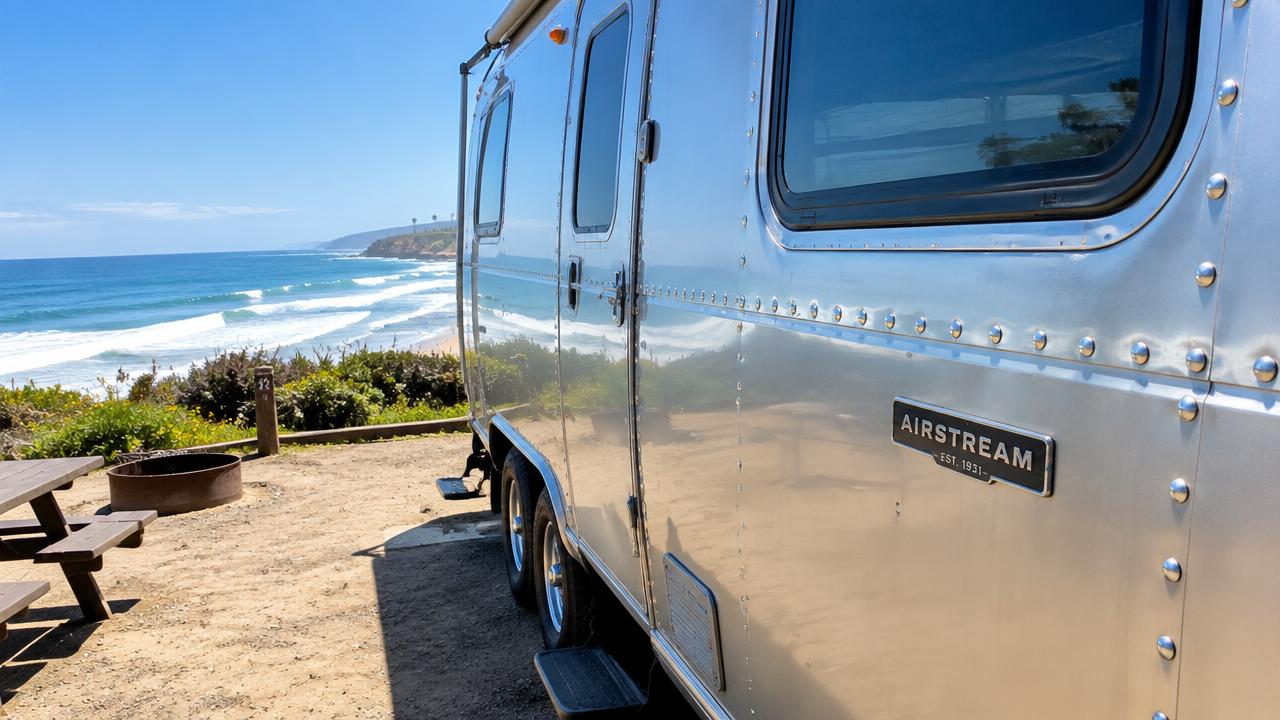
Waking up to the sound of waves at a campground near Oceanside or Doheny is about as good as it gets. The ocean air that makes coastal camping so pleasant also carries salt, and salt is hard on RVs. It settles on every surface, works into seams, and speeds up corrosion on metal parts.
You do not have to avoid the beach. You just need a few habits that keep salt from doing long-term damage.
How salt air affects your rig
Salt is hygroscopic, meaning it pulls moisture from the air. A thin salty film on your RV keeps metal damp longer, and that moisture plus salt is a recipe for corrosion.
- Aluminum forms a protective oxide layer, but salt can break it down and cause pitting, which shows up as small white or gray spots.
- Rivets and fasteners are vulnerable, especially where different metals meet, which can speed up corrosion.
- Steel parts like the frame, hitch, jacks, and steps rust faster near the coast.
- Electrical connections, marker lights, and exposed plugs can corrode and fail.
- Sealants and rubber seals can degrade, and salt residue can make it harder for them to do their job.
Rinsing habits that help
The single most useful habit is a thorough freshwater rinse after coastal trips. It does not have to be complicated.
- Rinse the whole exterior, top to bottom, with fresh water soon after you get home.
- Do not forget the underside: frame rails, axles, brakes, and the hitch area.
- Rinse around rivet lines, window frames, and roof edges where salt collects.
- Use a mild cleaner made for your RV's finish if the film is heavy.
- Let everything dry fully before putting covers on or closing up the rig.
Inspection habits
A few times a year, and after longer coastal stays, take a slow walk around your rig.
- Look for white or gray powdery spots on aluminum, especially near rivets.
- Check rivets for black streaks, which can mean movement.
- Look at sealant around windows, vents, and seams for cracks or gaps.
- Check the frame, hitch, and steps for rust.
- Test marker lights and look at exposed connectors for green or white buildup.
Seals and sealants
Good seals keep water out of walls and floors. Near the coast, keeping an eye on them matters even more. Our inland heat and sun also dry sealants out, so a rig that splits time between the beach and the desert gets it from both sides. Sealant that is cracked, shrunken, or pulling away should be addressed before it lets water in.
When corrosion needs a pro
Light surface oxidation is common and often manageable. But call a professional if you see pitting that is getting deeper, rivets that are loose or corroded, rust that flakes on the frame, or stains inside the coach. On an Airstream, corrosion around rivets and seams is a body work issue, and that is our specialty.
We handle Airstream body work, rivet and seam repair, and welding for corroded steel parts. Every job starts with a clear, detailed written estimate.
Spending time on the coast?
Call (855) 589-7533 and we will look your rig over where it is parked.
Have questions about your rig?
Call (855) 589-7533